



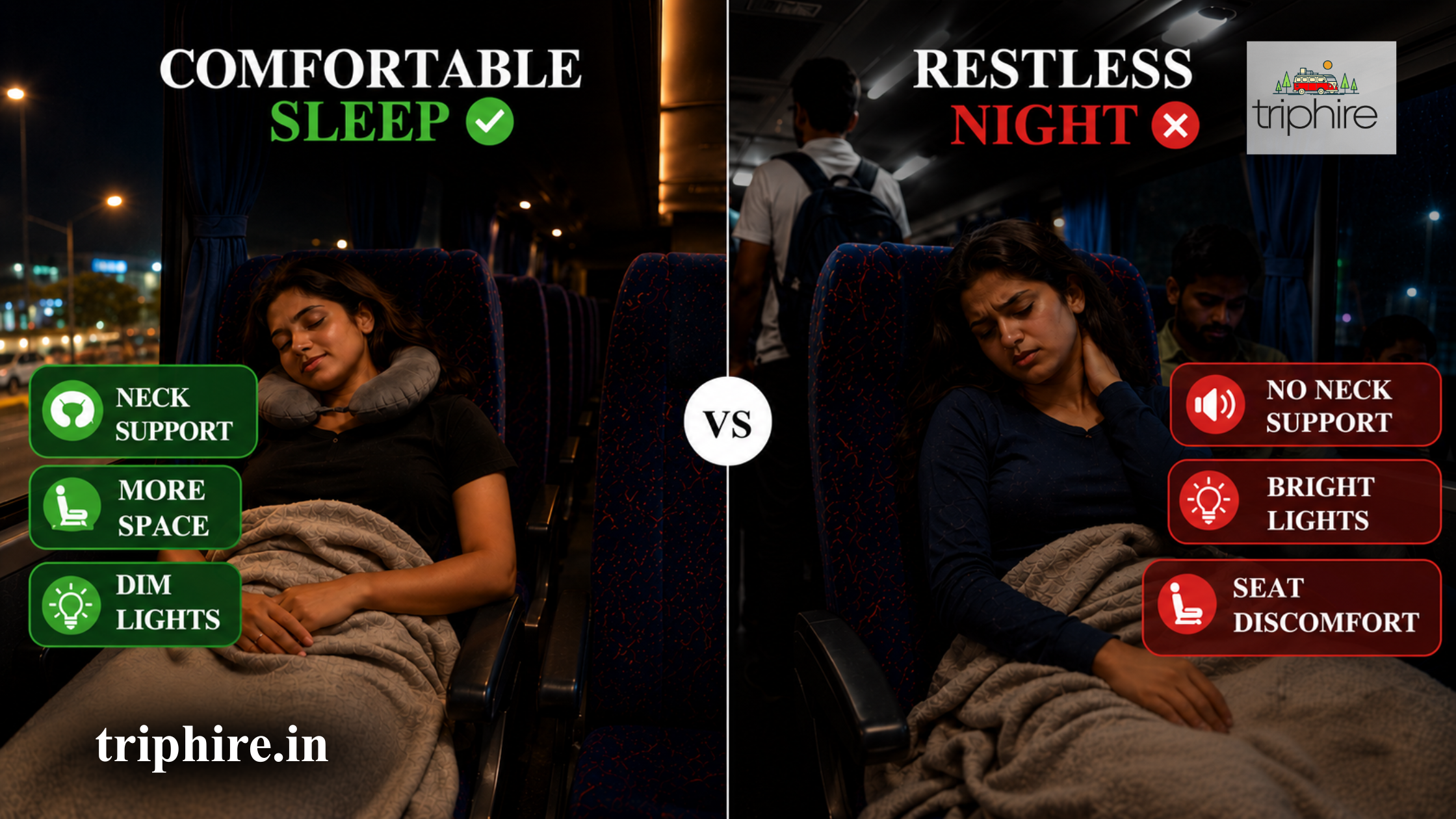
Overnight bus travel is a convenient way to cover long distances while saving daytime hours. However, many passengers experience sleep problems during night bus travel and arrive at their destination feeling tired instead of rested. Sleeping inside a moving vehicle is naturally harder than sleeping at home, and the tiredness can affect the rest of the trip if it isn’t addressed early.
Why Is Sleeping Difficult During Night Bus Travel?
During a night journey, the body may take time to adjust to a moving environment. Several factors can interrupt relaxation and reduce sleep comfort, and they often show up alongside other common issues, such as motion-related discomfort during long bus rides.
Common Sleep Problems and Solutions
| Common Problem | How It Affects Sleep | Simple Solution |
| Road vibrations and sudden movements | Interrupts continuous sleep | Improves with better seat choice |
| Passenger noise | Creates frequent disturbances | Use noise-blocking accessories |
| Bright lights | Makes it difficult to relax | Use an eye mask to reduce light exposure |
| Long sitting hours | Leads to stiffness | Stretch before boarding and during stops |
| Mobile phone usage | Keeps the mind active | Limit screen time before sleeping |
How Does Seat Selection Reduce Sleep Problems During Night Bus Travel?
Choosing the right seat improves travel comfort.
- Window seat: Provides better head support and personal space.
- Middle seats: Usually experience less movement compared to front and last rows.
- Avoid last row seats: These seats may experience more vibration.
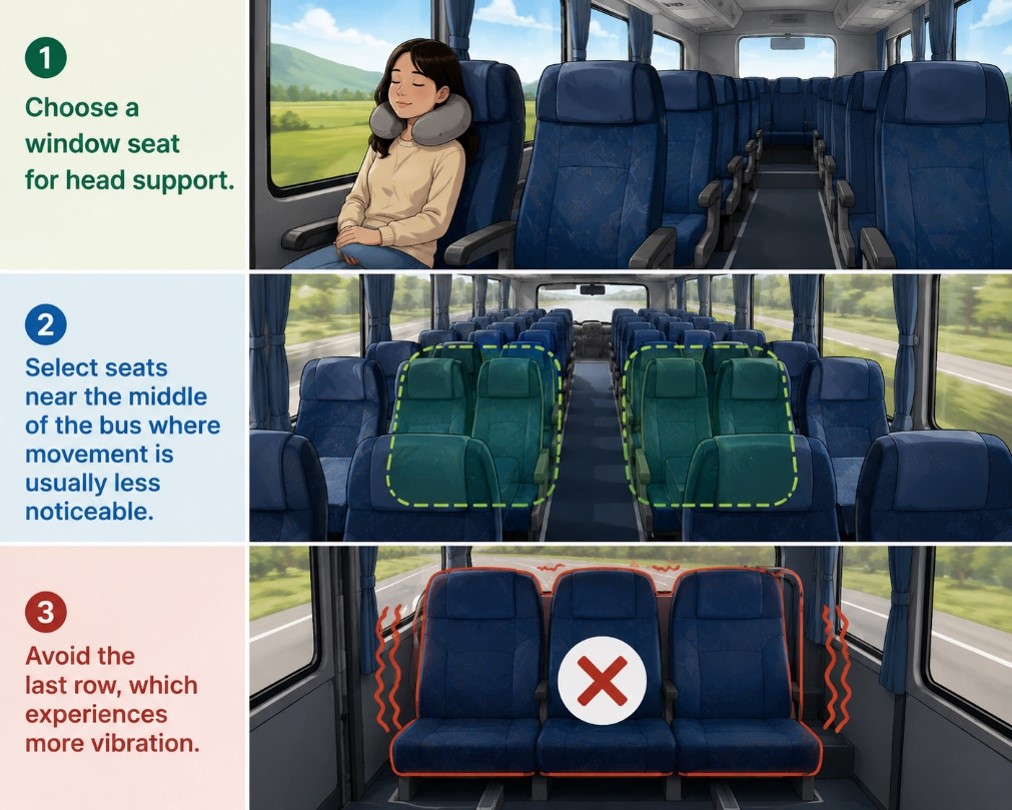
If seat selection is unavailable, a neck pillow can still improve comfort.
Simple Ways to Sleep Better During Overnight Bus Journeys
Sleep discomfort rarely shows up alone it’s often part of a wider set of common travel discomforts that TripHire helps address, so fixing one usually improves the others too.
1. Carry Essential Travel Accessories
Items like a neck pillow or eye mask can provide additional support and help create a better resting environment.
2. Wear Comfortable Clothing
Loose clothing allows easier movement and helps passengers relax during long journeys.
3. Avoid Heavy Meals Before Travel
Light meals before boarding prevent discomfort and reduce Sleep Problems During Night Bus Travel.
4. Stay Hydrated During Travel
Drinking enough water helps maintain comfort throughout the journey.
5. Limit Caffeine Before the Journey
coffee or tea close to boarding keeps the body more alert than you want at bedtime.
How to Improve Travel Comfort?
A comfortable journey starts with better planning. Checking travel facilities, selecting suitable seating, and choosing a reliable travel option can make overnight journeys smoother.
TripHire helps travellers compare available bus options and choose journeys based on their comfort preferences. With better planning and suitable comfortable seating choices, passengers can enjoy a more relaxed travel experience during long-distance trips. The body’s adjustment to travel-related disruption is well documented, and tips for staying comfortable during long road journeys can help you plan smarter for your next trip.
Plan your next journey with TripHire for a comfortable ride.
Also Read: How to Avoid Nausea During Long Bus Journeys in Tamil Nadu?